


How does a stressed dog behave? It often communicates its distress subtly, such as panting without heat, pacing restlessly, or withdrawing into itself. It is important for the owner to learn to recognise these signs, as they are key to the dog’s wellbeing. This guide will help you interpret the eight most common signs of stress and provide ways to assist your friend.
What is dog stress and how does it manifest?
Dog stress is a physiological alert state of the body and mind, which is a reaction to a perceived threatening or overwhelming situation. Stress can be acute, meaning it is quickly transient, such as during a thunderstorm, or chronic. Prolonged chronic stress, which can arise from loneliness, lack of stimulation, or pain, is particularly harmful to a dog’s health.
When a dog is stressed, its body enters a ”fight or flight” state and releases cortisol and adrenaline. As a short-term reaction, this is beneficial, but if prolonged, it depletes the body and weakens the immune system. Typical triggers include loud noises, changes in the environment, or separation anxiety. The most effective way to manage stress is to create predictability through clear routines and a safe environment. If daily life does not allow for this, a professional care facility, such as Tassu & Tassu’s dog daycare, can provide the much-needed rhythm and safe social moments.
Key point: Dog stress can be either a short-term reaction or a long-term condition that affects its health and behaviour.
How does a stressed dog behave? 8 common symptoms
A stressed dog behaves in various ways, such as panting without heat, whining, avoiding contact, or compulsively licking itself. Your task is to learn to read these changes in behaviour and body language. Although every dog is an individual, certain symptoms often recur. The true picture emerges when you observe the dog’s overall package. If several of the following signs match, it is time to take action.
Below are the eight most typical symptoms that indicate a dog is experiencing stress:
- Increased panting and drooling: Shallow and rapid panting without physical exertion or heat.
- Trembling and restlessness: Muscle tremors, restless movement, and inability to settle down.
- Changes in vocalisation: Continuous whining, high-pitched and repetitive barking, or atypical growling.
- Changes in appetite and thirst: Refusal of food or increased drinking.
- Compulsive behaviour: Constantly licking paws, chewing on itself, or destroying items.
- Avoidant behaviour and hiding: Withdrawing into itself, avoiding contact, or hiding under furniture.
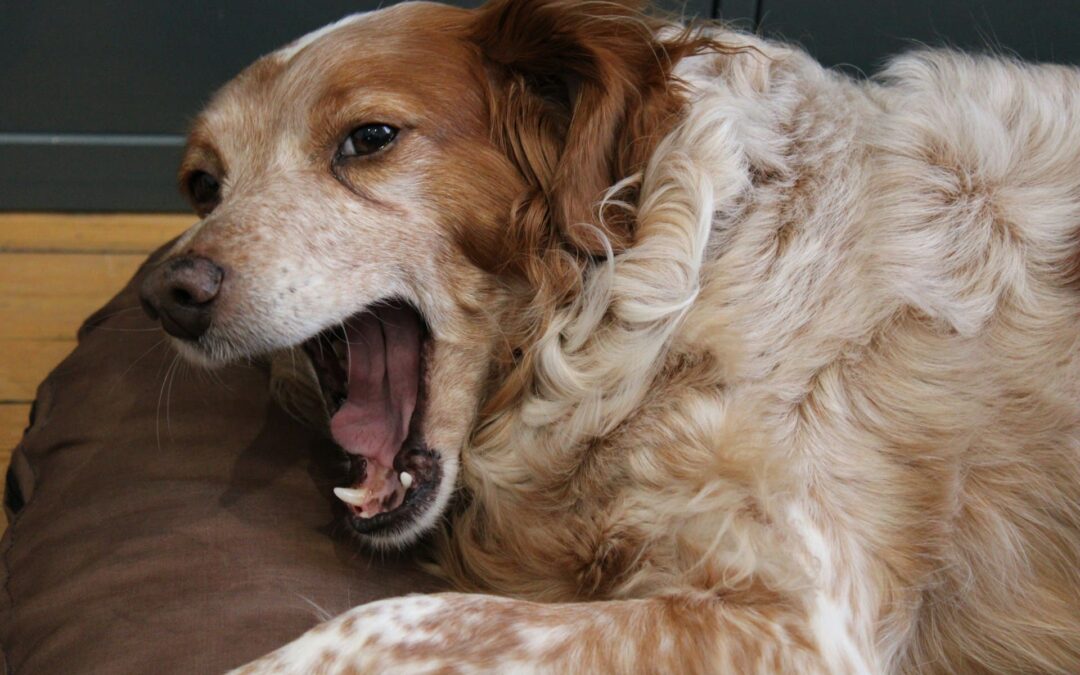
- Calming signals: Repeated yawning, lip licking, and turning the head away.
- Physical symptoms: Sudden diarrhoea, vomiting, flaking skin, or excessive shedding.
Key point: The simultaneous occurrence of several stress symptoms is a clear sign of the dog’s distress.
Why does a dog pant and drool when stressed?
A dog pants and drools when stressed because its body enters a ”fight or flight” state, which raises the heart rate and triggers physiological reactions. This stress panting is rapid, shallow, and often occurs even in a cool environment without exertion. You can best recognise it by the dog’s lips being tightly pulled back. Many dog owners have seen this on car journeys: even when the air conditioning is blowing cool air, the dog pants.
Increased drooling is also a clear sign. Stress triggers saliva production, and in severe cases, drool can flow in streams. Studies show that up to 70% of dogs suffering from separation anxiety exhibit this symptom. In our pet daycare in Helsinki, our staff, trained in animal care, is skilled at distinguishing play-induced panting from anxiety. This expertise ensures a safe environment for every guest.
Key point: Stress panting is rapid and shallow, and it is a clear sign of the dog’s discomfort in the situation.
What does a dog’s vocalisation indicate about stress?
A dog’s stress can manifest as high-pitched and continuous whining, monotonous barking, or atypical growling, through which it tries to communicate its distress. Vocalisation is the dog’s way of releasing steam and seeking help. While barking is part of a dog’s life, stress barking is often monotonous, shrill, and seems to go on endlessly without a clear reason. This is a classic symptom, for example, when left alone.
Whining, on the other hand, is often an attempt to seek safety in an uncertain situation. Some dogs, however, become completely silent and withdrawn when stressed. Therefore, it is vital to know your dog’s normal sounds. The trained staff at Tassu & Tassu’s dog hotel responds immediately to unusual vocalisations to calm the dog and provide it with meaningful activities.
Key point: Changes in a dog’s normal vocalisation, such as continuous whining or monotonous barking, are often clear signs of stress.
How does stress affect a dog’s stomach and appetite?
Stress affects a dog’s stomach and appetite by directing blood flow away from the digestive system, which can cause loss of appetite, vomiting, or sudden diarrhoea. In practice, stress hormones prepare the body to flee, not to digest food. The digestive system goes into conservation mode, which can quickly reflect on the dog’s wellbeing.
It is estimated that over 50% of dogs’ sudden stomach issues are related to a stressful event, such as travelling or being alone (veterinary publications). Some dogs, conversely, react by eating compulsively. Changes in appetite are one of the most reliable indicators of stress.
Key point: Sudden loss of appetite or diarrhoea are common physiological reactions to stress experienced by dogs.
How to distinguish between acute and chronic stress in dogs?
Acute stress is a short-term reaction to a specific event, such as a thunderstorm, while chronic stress is a long-term condition resulting from, for example, loneliness or pain. Recognising chronic stress is vital for a dog’s wellbeing, as it can lead to serious health issues. For instance, many timid rescue dogs suffer from chronic stress and thrive only in a calm, predictable environment.
| Feature | Acute stress | Chronic stress |
|---|---|---|
| Duration | Short, from minutes to hours | Ongoing, from weeks to years |
| Cause | Sudden event (e.g. fireworks, veterinary visit) | Long-term situation (e.g. loneliness, pain, lack of stimulation) |
| Typical symptoms | Panting, trembling, hiding, whining | Apathy, overreactivity, compulsive behaviours (licking), constant flaking |
| Impact on health | Temporary, usually recovers quickly | Weakened immune response, skin issues, stomach problems, behavioural disorders |
| Example | A dog trembles and hides under the bed during a thunderstorm. | A dog constantly licks its paw, is apathetic, and reacts irritably to minor stimuli. |
At Tassu & Tassu, we specialise in the care of sensitive pets. Our staff, trained in animal care, and our calm facilities are designed to create a safe environment where even a dog suffering from chronic stress can relax.
Key point: Recognising chronic stress is important, as its long-term effects are significantly more serious than those of acute stress.
What are a dog’s calming signals?
A dog’s calming signals are subtle gestures, such as yawning, lip licking, or turning its head away, through which the dog tries to calm itself and communicate discomfort. They are used to avoid conflicts. Recognising these signals is an important skill, as they serve as a warning before more intense symptoms, such as trembling or barking, occur. Norwegian dog trainer Turid Rugaas did pioneering work in identifying over 30 such signals.
The most common calming signals include:
- Yawning: The dog yawns even though it is not tired.
- Licking lips and nose: A quick movement of the tongue over the lips or nose without the presence of food.
- Turning the head away: The dog turns its gaze or entire head away from the source of stress.
- Sniffing the ground: The dog suddenly starts sniffing the ground intensely in an unpleasant situation.
- Slow movement: The dog moves slowly or freezes in place.
Our animal carers at Tassu & Tassu are trained to recognise these signals. Our ability to read subtle calming gestures helps us understand the emotional state of each dog in our care in real-time and ensures that the experience is genuinely stress-free.
Key point: Recognising calming signals is key to understanding a dog’s discomfort before stress escalates.
Summary
Recognising your dog’s stress is a skill that can be learned. It is the first and most important step. When you learn to read how a stressed dog behaves – its panting, trembling, and subtle calming gestures – you can take action before the situation worsens. Predictable daily life, appropriate stimulation, and a safe environment are the best remedies for stress.
Does your dog need stimulation during the day or do you need a reliable care facility while on holiday? The professional staff at Tassu & Tassu, trained in animal care, and our calm facilities in Helsinki provide your dog with a stress-free environment. We are conveniently located near good transport links, right next to the Raide-Jokeri and close to the train station, making it easy for you to continue your journey, for example, to the airport. Explore our diverse dog hotel services and conveniently book additional services, such as nail trimming or bathing. Contact us!
Frequently Asked Questions
What should I do if my dog is constantly stressed?
If your dog’s stress is ongoing, consult a veterinarian or a professional dog trainer. The veterinarian will rule out any underlying health issues, and a behaviour expert will help identify the causes of stress and develop a treatment plan. Do not face the problem alone, as chronic stress significantly diminishes your dog’s quality of life.
Can stress cause health problems in dogs?
Yes. Chronic stress weakens a dog’s immune system, making it more susceptible to illness. Common health problems caused by stress include recurrent stomach issues, skin problems such as hot spots and allergies, and behavioural disorders. Hidden pain can also worsen with stress. Therefore, addressing the causes of stress is important.
How can I reduce my dog’s stress at home?
Create a calm and predictable daily routine for your dog. Ensure it has a safe resting place to retreat to. Provide sufficient species-appropriate exercise and mental stimulation, such as interactive games or scent work. Consistent routines regarding feeding and walks enhance your dog’s sense of security and reduce stress.
Are there natural ways to alleviate my dog’s stress?
Yes. Many dogs benefit from pheromone products (diffusers or collars) that mimic the calming pheromone released by the mother. Chewing is also a natural way for dogs to relieve stress, so provide them with safe chews and toys. Calming music or white noise can also help some individuals relax.
When should I take my dog to the vet due to stress?
Take your dog to the vet if the stress symptoms are sudden and severe, or if you cannot identify a clear cause for them. Also, if stress is accompanied by other concerning symptoms, such as prolonged loss of appetite, vomiting, severe diarrhoea, or apathy, it is advisable to seek professional help to rule out potential illnesses.
How does a stressed dog behave at night?
At night, a stressed dog may behave restlessly: it may pace, pant, whine, or scratch at doors. Some dogs may not be able to sleep at all or wake up constantly. This can be a sign of separation anxiety, pain, or other discomfort. Monitor whether the symptoms recur and try to determine their underlying cause.
Can a dog stress from being home alone?
Yes, separation anxiety is one of the most common causes of stress in dogs. It can manifest as destruction, vocalisation, or indoor toileting. Being alone should be gradually trained through positive experiences. Daycare can be an excellent solution for dogs that do not thrive alone for long periods.
Does training help reduce a dog’s stress?
Yes, positive reinforcement-based training boosts a dog’s confidence and provides it with tools to cope with challenging situations. Experiences of success teach the dog to adapt to new things and reduce overreactivity. Regular, rewarding training is an excellent way to build the relationship and decrease stress sensitivity.